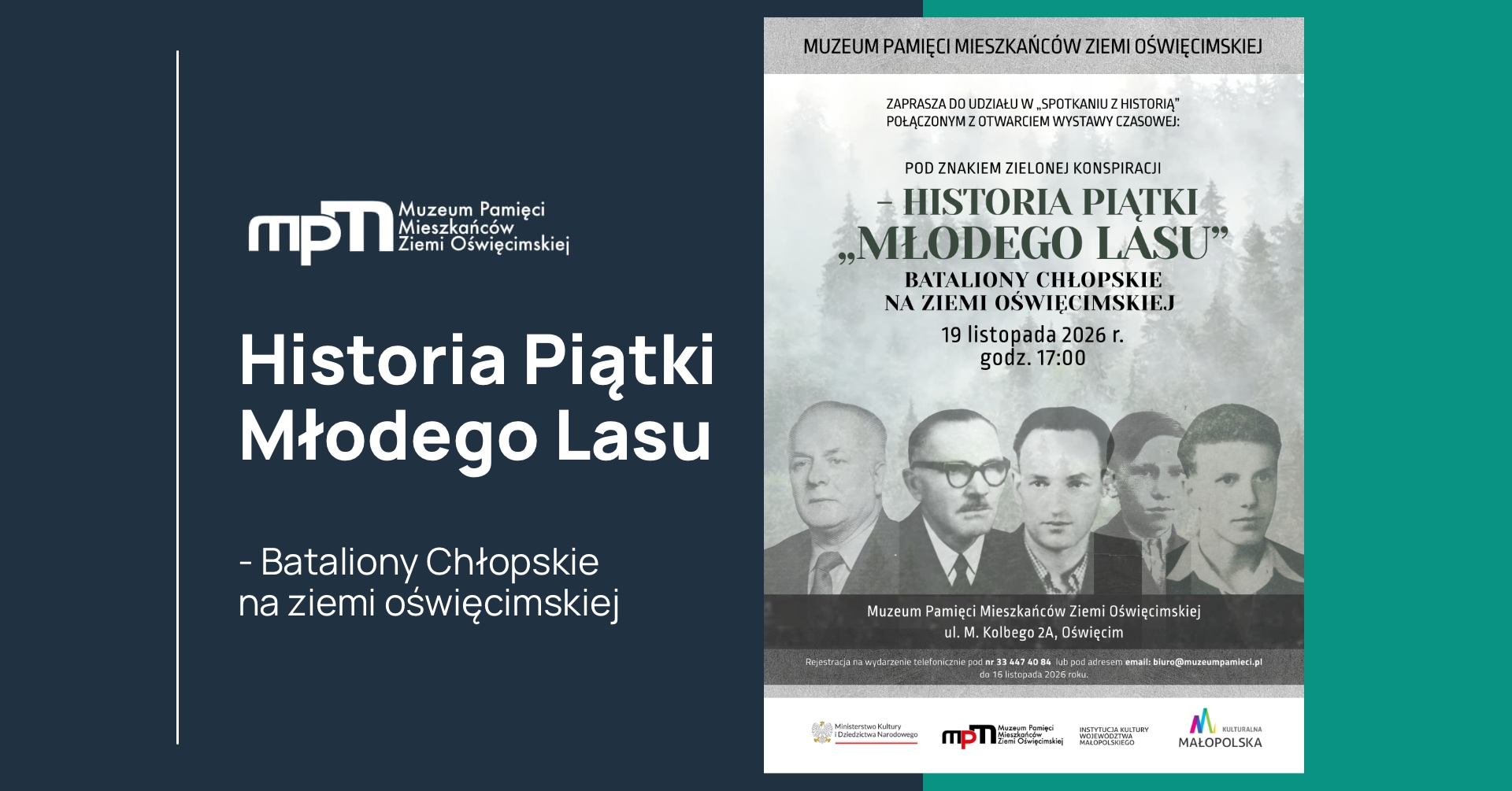
The Remembrance Museum of the Land of Oświęcim invites you to a special event on Thursday, November 19, 2026, at 5:00 p.m. The program will include a meeting and the opening of a temporary exhibition entitled “Under the Sign of the Green Conspiracy: The Story of the Five Members of ‘Młody Las’ (‘Young Forest’) – The Peasants’ Battalions (BCh) in the Oświęcim Region.” Admission is free.
The Peasants’ Battalions were the second-largest Polish armed resistance organization operating in German-occupied Poland, after the Home Army (AK). Estimates suggest that around 160,000 people belonged to the BCh at various times. The organization was particularly active in the Kielce region, the Lublin region, Małopolska, and Mazovia.
In the Oświęcim region, the BCh conducted intelligence operations and sabotage, helped people at risk of arrest, protected local residents, and provided assistance to prisoners and escapees from Auschwitz concentration camp. Its members also organized food supplies and material support for local communities and the underground movement. Due to strict German surveillance, armed operations were generally limited to small and carefully planned actions.
To help prisoners, a special BCh group operating near the camp was established. It was initially led by Wojciech Jekiełek, code-named “Żmija,” and, from January 1943, by Kazimierz Jędrzejowski from Osiek, code-named “Maniek” and “Kazek.”
Another underground organization associated with the peasant movement in Małopolska was “Młody Las” (“Young Forest”). It was established in mid-1943 by the Regional Leadership of the Peasant Movement in Kraków as a continuation of the pre-war Rural Youth Association “Wici.” Its purpose was to prepare young people from rural areas, aged 16 and older, for involvement in the struggle for independence and, after the war, for work within “Wici.”
Młody Las” functioned as an independent organization under the leadership of Edward Czubek, code-named “Cichy.” By the end of the war, it had established branches in nearly every county in Małopolska and brought together almost 5,000 young people.
Kazimierz Jędrzejowski was responsible for organizing the structures of “Młody Las.” His work was cut short on November 12, 1943, when he was unexpectedly arrested in Malec. After a resident of Osiek identified him, he was subjected to a thorough search. The Germans found a card listing the names and code names of the members of “Młody Las.” They discovered a document listing the names and code names of „Młody Las”. Among them were Stanisław Bies from Osiek, from Osiek; Eugeniusz Siuta from Brzeszcze; Albin Kuźma from Osiek; and Franciszek Naglik from Malec.
Kazimierz Jędrzejowski, Stanisław Bies, and Eugeniusz Siuta were taken to Bielsko for interrogation and subsequently imprisoned in Mysłowice prison. Franciszek Naglik and Albin Kuźma, having been warned in time, managed to go into hiding. The fate the arrested men was tragic: Kazimierz Jędrzejowski and Eugeniusz Siuta died at Auschwitz, while Stanisław Bies survived his imprisonment.
The memory of these young men, who risked their lives carrying out underground activities during the war, remains strong in Malec and Osiek. Their story, however, is far less widely known in other parts of the Oświęcim region. In keeping with one of its fundamental missions – commemorating those who helped prisoners of Auschwitz concentration camp – the Remembrance Museum of the Land of Oświęcim has decided to bring the activities of the Peasants’ Battalions and “Młody Las” to a wider audience.
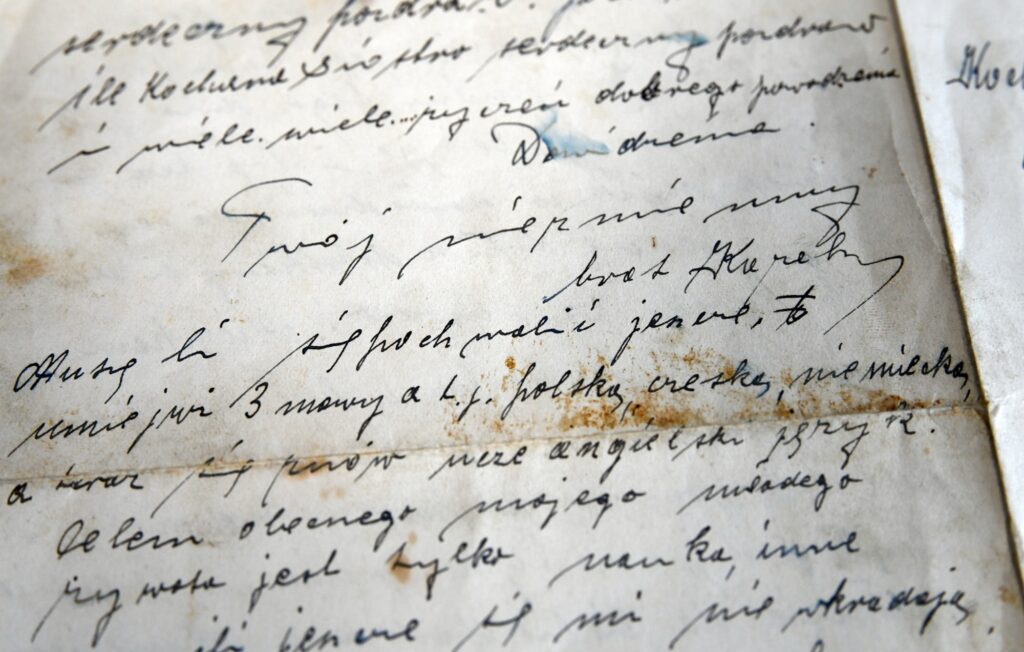
The meeting, dedicated to the BCh in the Oświęcim region and the men of “Młody Las,” will be attended by relatives of those who were involved in the underground resistance during the German occupation. The event will also feature the opening of a temporary exhibition. In addition to biographies of the five members of “Młody Las,” the exhibition will include objects associated with them. For the first time, visitors will be able to see letters written by Kazimierz Jędrzejowski to his sister Elżbieta, which are held in the Museum’s collection. The event has been organized in cooperation with the Auschwitz-Birkenau State Museum, particularly with Szymon Kowalski of its Archives Department; the Malec Village Council Museum and Maria Krawczyk, the village head of Malec; Primary School and Preschool Complex No. 1 in Osiek and its principal, Monika Rycerz; and the longtime editor-in-chief of the monthly magazine “Echa Osieka” and local history enthusiast Krystyna Czerny.