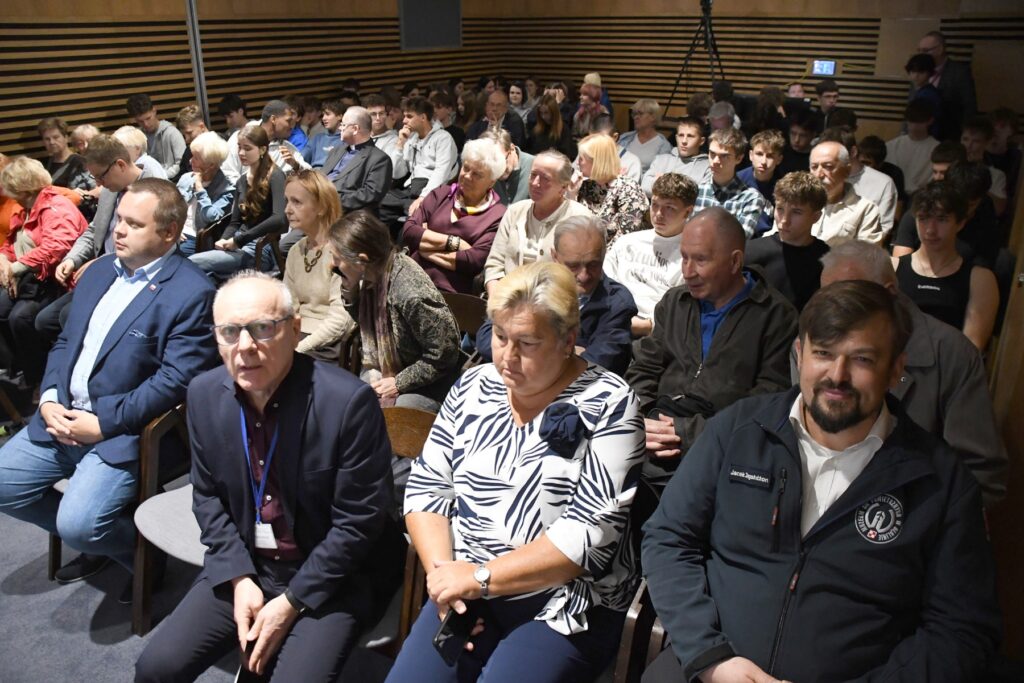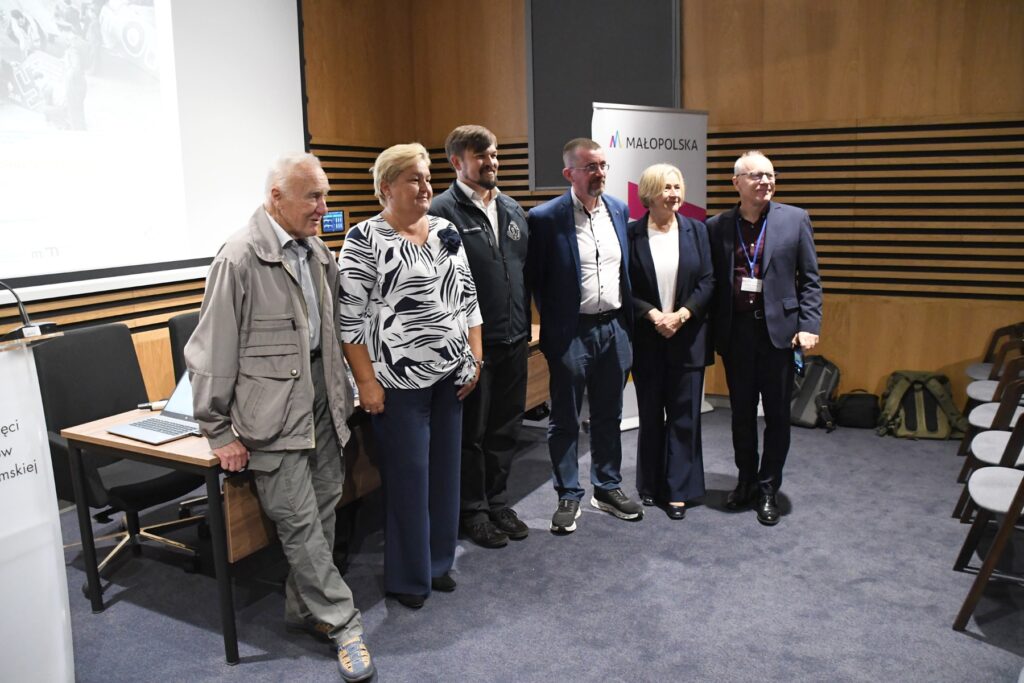
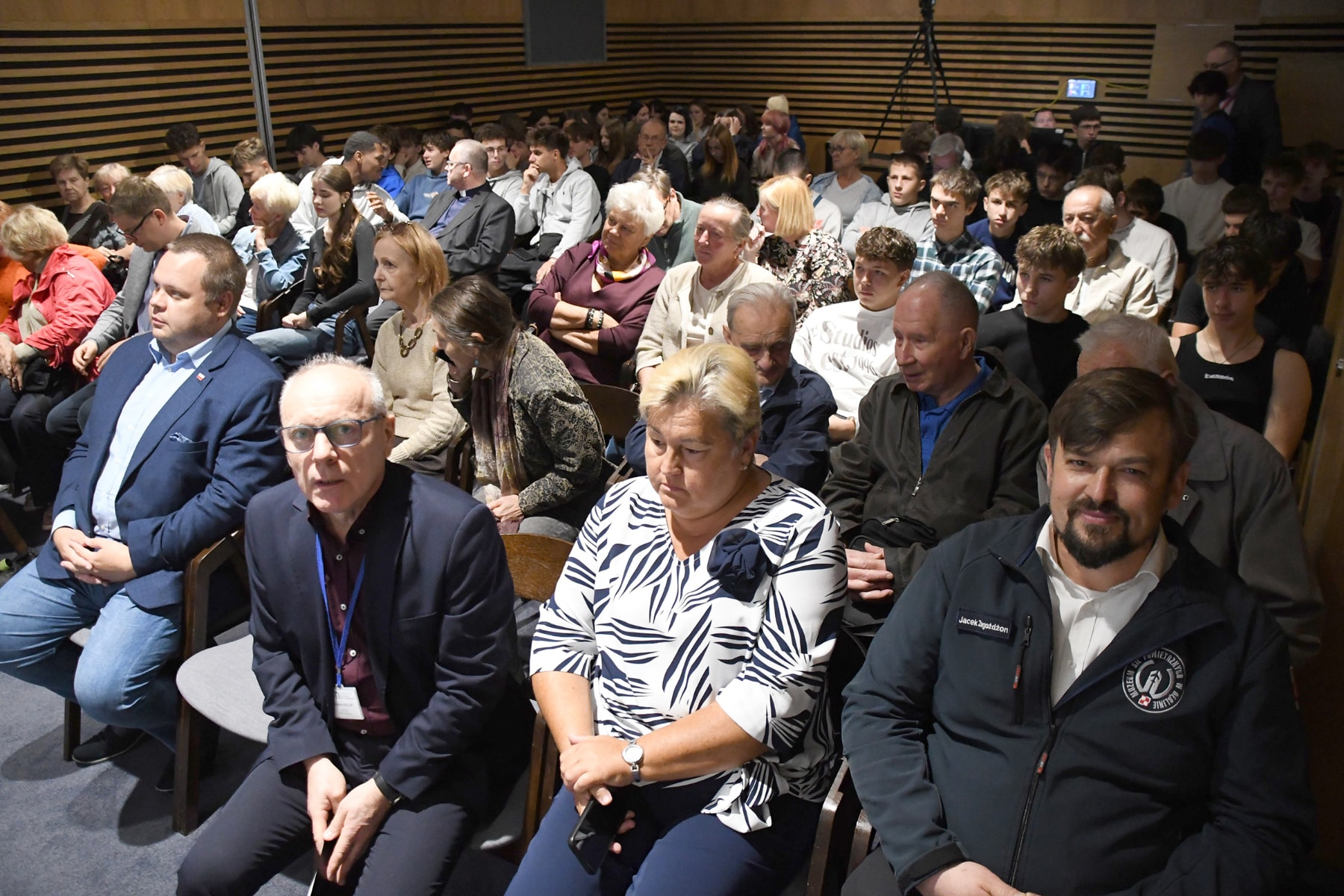
On Friday, September 11, 2026, the Remembrance Museum of the Land of Oświęcim hosted a popular-science conference titled “Airmen from the Oświęcim Region on the Fronts of World War II.”
A large number of participants were students from two local schools: Powiatowy Zespół nr 2 Szkół Ogólnokształcących Mistrzostwa Sportowego i Technicznych w Oświęcimiu and Powiatowy Zespół nr 10 Szkół Mechaniczno-Elektrycznych im. Mikołaja Kopernika in Kęty.
Thank you for being here and for helping to preserve the memory of those who fought for freedom far from their homeland” said Dorota Mleczko, Director of the Remembrance Museum of the Land of Oświęcim, in welcoming the participants.
The British Did Not Want Polish Pilots
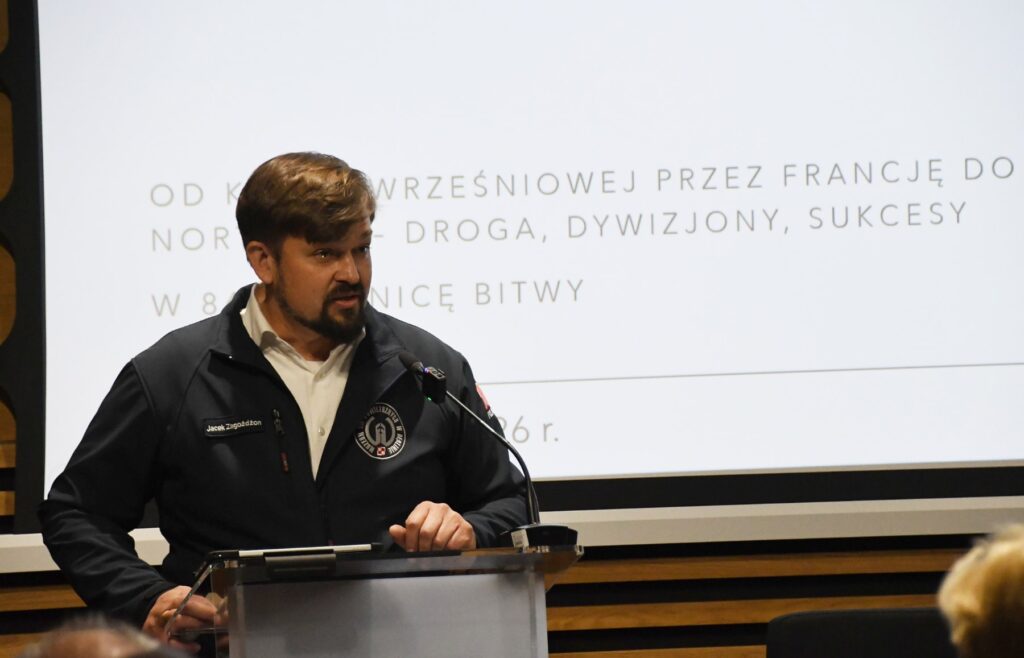
Jacek Zagożdżon, curator and head of the History, Aviation and Education Department at the Air Force Museum in Dęblin, opened the conference with an overview of the state of Polish aviation in September 1939. As he explained, of the 400 aircraft evacuated abroad, 200 made it out of Poland. Following the September Campaign, Polish airmen made their way to France by various routes, and after France fell, to Britain.
But the British didn’t want us. They were already fighting a battle, they were in crisis, and they viewed Polish airmen through the lens of that crisis. The only option they offered was for us to join the Royal Air Force as volunteers,” he said. He emphasized that Polish airmen were exceptionally well trained and that, due to the heavy losses they were suffering, the British were forced to draw on foreign personnel.
During his presentation, he also discussed the history of two Polish fighter squadrons: No. 302 “Poznański” Fighter Squadron and the better-known No. 303 “Warszawski” Tadeusz Kościuszko Fighter Squadron.
A Wealth of Information About Aircraft
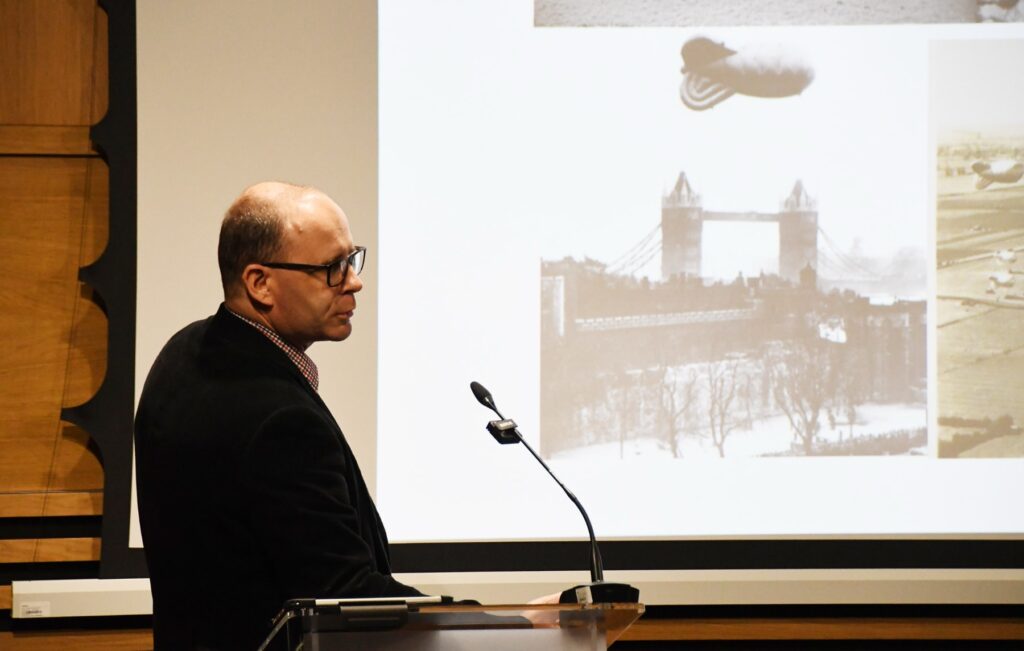
Jarosław Dobrzyński, a curator at the Polish Aviation Museum in Kraków, focused his presentation on the aircraft used during the Battle of Britain. He provided a concise overview of the technical specifications of Allied aircraft such as the Hawker Hurricane Mk I, Supermarine Spitfire Mk I, Boulton Paul Defiant, Bristol Blenheim IF, and Fairey Battle Mk I.
He also presented aircraft used by the Germans, including the Messerschmitt Bf 109E and Bf 110, Junkers Ju 88A, Heinkel He 111, Dornier Do 17, and Junkers Ju 87B.
Jacek Dobrzyński’s presentation also covered a crucial element of Britain’s air defense during the Battle of Britain: the Dowding System, an integrated air defense system. It included radar stations and the Observer Corps, whose members were trained to identify aircraft by their silhouettes and estimate their altitude and direction of flight. The use of the Dowding System played a major role in Britain’s victory in the Battle of Britain.
51 Airmen from the Oświęcim Region
According to information published on the website listakrzystka.pl, more than 17,000 airmen served in the Polish Air Force in Great Britain during World War II. At least 51 of them came from the Oświęcim region. Their birthplaces included Przeciszów, Wilczkowice, Kęty, Osiek, Oświęcim, Brzezinka, Głębowice, Zator, Brzeszcze, Bielany, Dwory, Piotrowice, Gorzów, Babice, Łęki, Palczowice, Bulowice, and Grojec. A total of 145 Polish pilots took part directly in the Battle of Britain.
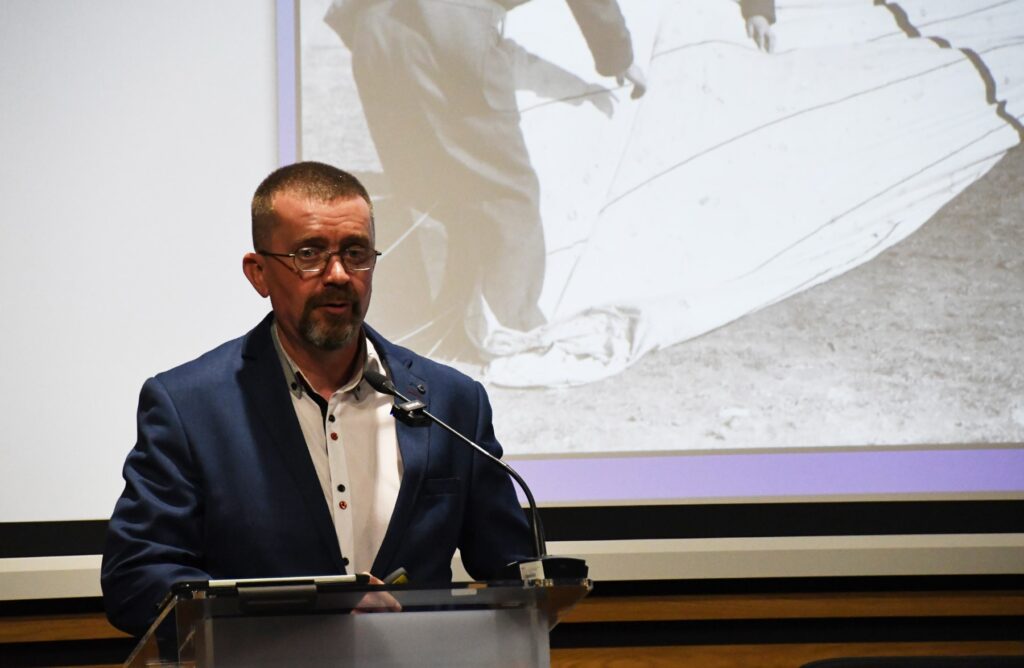
Tomasz Mikuła, a curator at the Polish Aviation Museum in Kraków, introduced the audience to the stories of five of the airmen from the Oświęcim region.
Stanisław Litak of Oświęcim (January 3, 1918 – March 5, 1945)
In May 1938, he passed his high school final examinations and decided to pursue a career as a professional military aviator. After the September Campaign, he made his way to Britain via France. He began his training in January 1941. A year later, he was assigned to No. 316 “Warszawski” Fighter Squadron. He was killed on March 5, 1945, while escorting Allied bombers. After an engine failure, he bailed out too late and crashed to the ground.
Piotr Dunin of Głębowice (June 19, 1901 – February 25, 1942)
Piotr Dunin’s great passion was watchmaking. As a boy, he set up a small workshop next to the manor house, where he repaired clocks and watches. His fascination with watches stayed with him throughout his life. His later RAF colleagues joked that it was his only weakness,” Tomasz Mikuła said.
Piotr Dunin graduated from the Air Force Officers’ School in Dęblin and served in the 2nd Air Regiment in Kraków. After the September Campaign, he made his way to Britain via France. There, he was assigned to No. 309 “Ziemi Czerwińskiej” Army Cooperation Squadron.
He was killed on February 25, 1942, in an aviation accident during a training exercise.
Władysław Balon of Przeciszów (October 26, 1920 – August 28, 1942)
As a young man, he was a schoolmate of Karol Wojtyła. He graduated from the Officer Cadet School in Dęblin. After the September Campaign, he made his way to Britain and was assigned to No. 316 “Warszawski” Fighter Squadron.
He was killed on August 28, 1942, during a training flight
Stanisław Jura of Kęty (September 23, 1918 – December 23, 2012)
He was also a classmate of Karol Wojtyła.
In response to an appeal from the Polish Armed Forces Command in Great Britain, Stanisław Jura volunteered for service in the air force. After completing his flight training, he began serving as a pilot with No. 304 “Ziemi Śląskiej” Bomber Squadron, named after Prince Józef Poniatowski. No. 304 Squadron distinguished itself by taking part in operations against German U-boats during the Battle of the Atlantic,” Tomasz Mikuła said.
In 1948, Stanisław Jura returned to Poland. He had great difficulty finding work and was also kept under surveillance by officers of the Security Office. He died at the age of 94.
Józef Witek of Brzeszcze (April 21, 1915 – August 14, 1944)
Following mobilization in August 1939, he was assigned to the 1st Air Regiment in Warsaw as an armament specialist. After the outbreak of the war, he was taken prisoner by the Soviets. Under the Sikorski–Mayski Agreement, he reached Great Britain via Arkhangelsk in October 1941. In May 1943, he was assigned to No. 305 “Ziemi Wielkopolskiej” Bomber Squadron, named after Marshal Józef Piłsudski, and later to No. 300 Bomber Squadron.
In 1944, Józef Witek volunteered for service with No. 1586 Special Duties Flight, which carried out supply drops for resistance movements in German-occupied Europe. On August 14, 1944, the Liberator in which Józef Witek was serving took off from Brindisi, Italy, on a mission to drop supplies to the fighters in Warsaw. The crew successfully completed the drop in the area of Krasiński Square in Warsaw. On the return journey, they were attacked by German fighters over the Niepołomice Forest,” Tomasz Mikuła recounted.
The airmen bailed out of the burning aircraft, but they were flying too low for their parachutes to open in time. All of them died on impact.
The conference concluded with a brief tribute to RAF pilot Wiktor Chałupnik. His nephew, Józef Chałupnik, shared memories of his uncle.