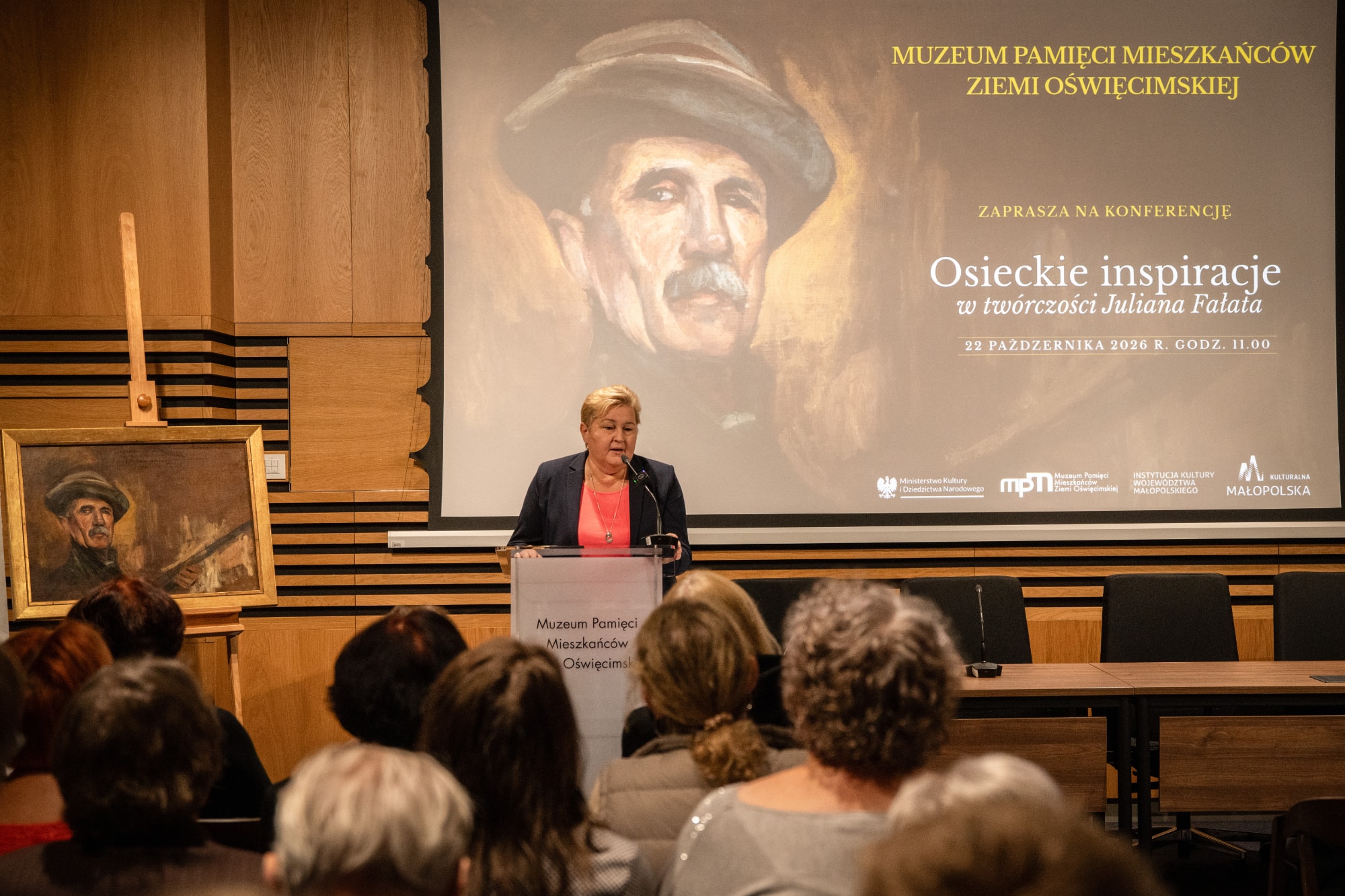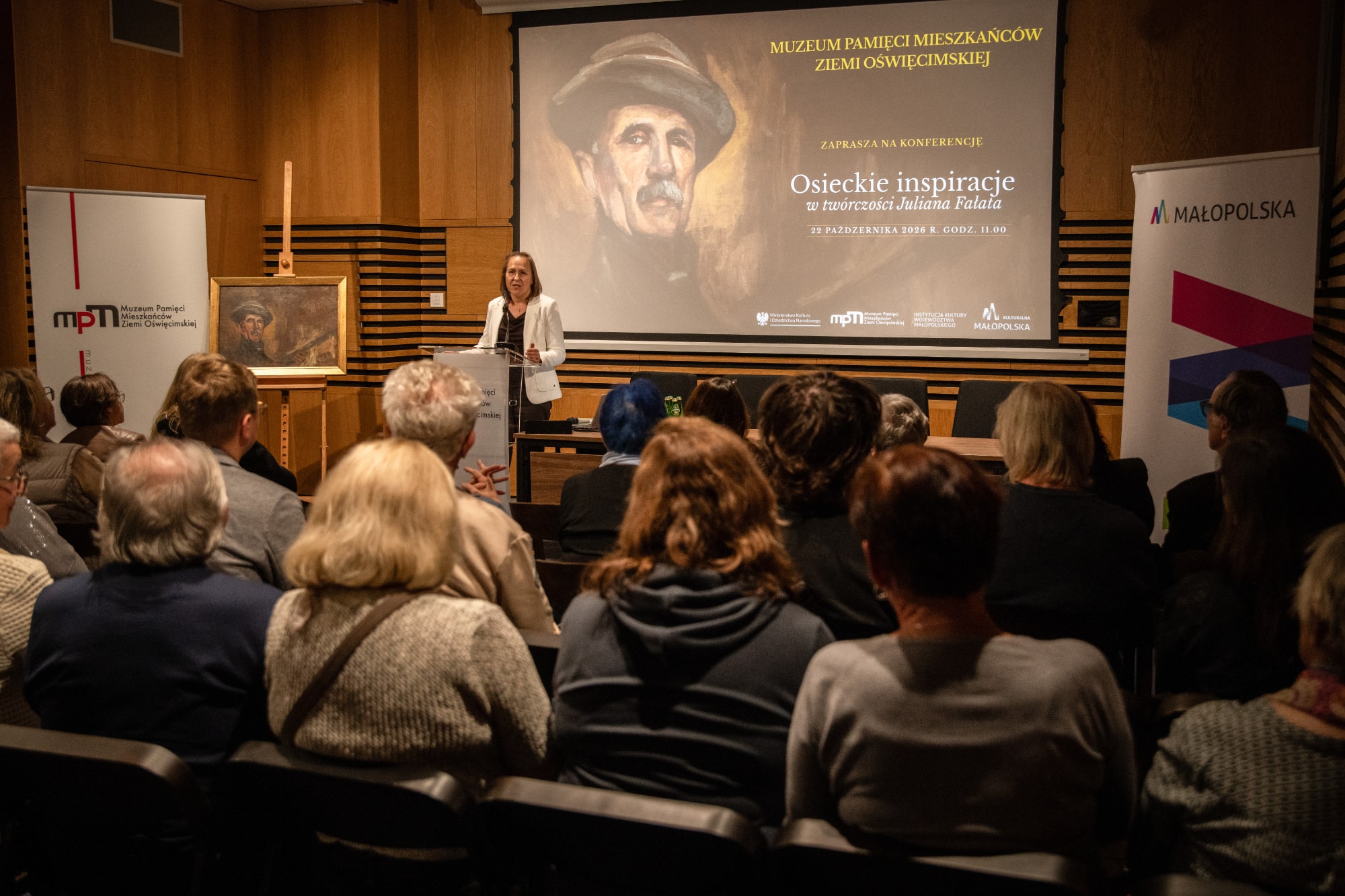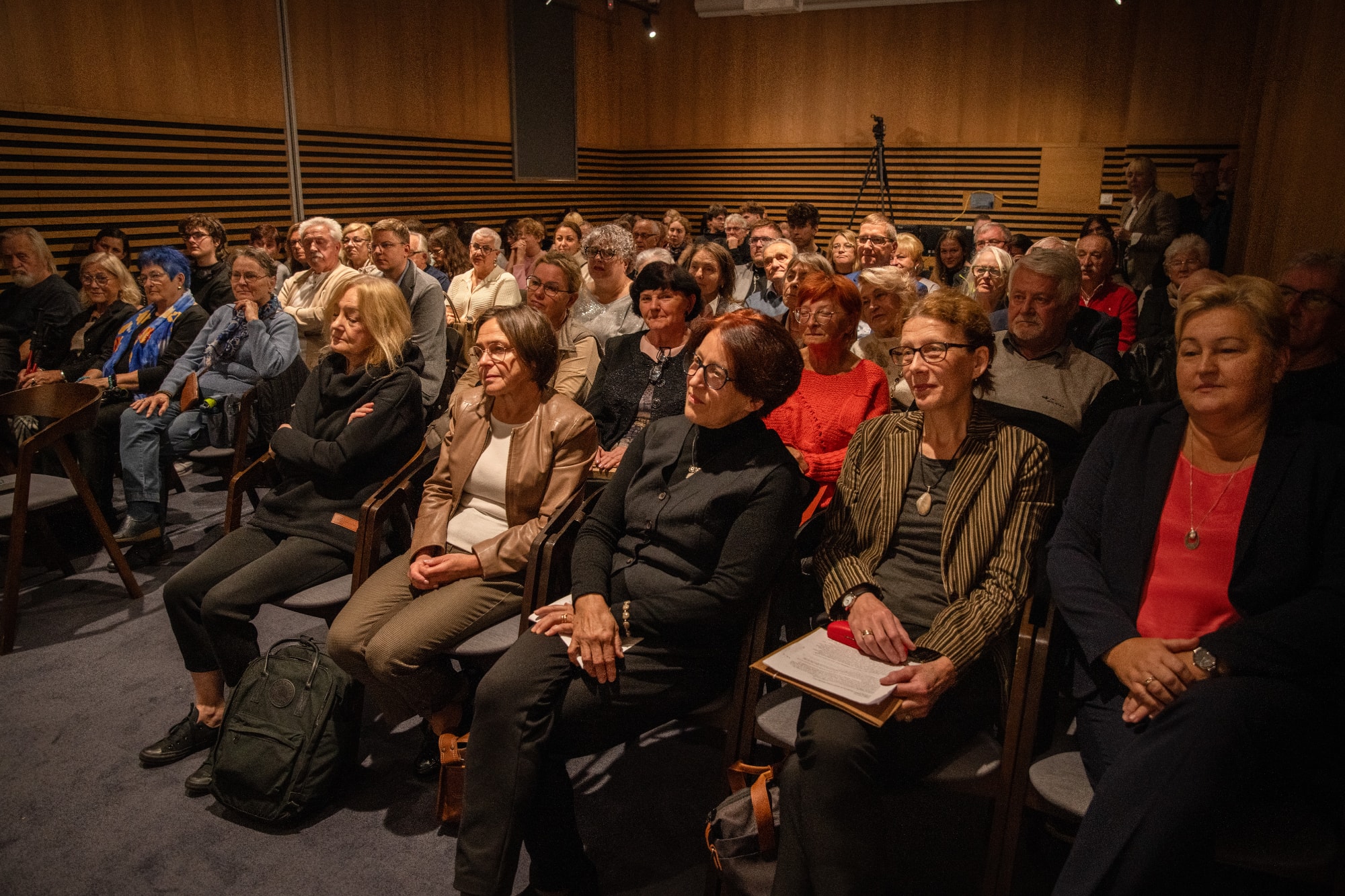
On October 22, 2026, the Remembrance Museum of the Land of Oświęcim hosted a scholarly conference titled “Inspirations from Osiek in the Work of Julian Fałat.” The event attracted art lovers, those fascinated by the life and work of the renowned Polish painter, and a group of students.
The conference was officially opened by the Museum’s Director, Dorota Mleczko, who welcomed the guests. Anna Cieplińska-Jaglarz, the Museum’s curator and the event’s moderator, then introduced the artist and provided an overview of the topics to be discussed.
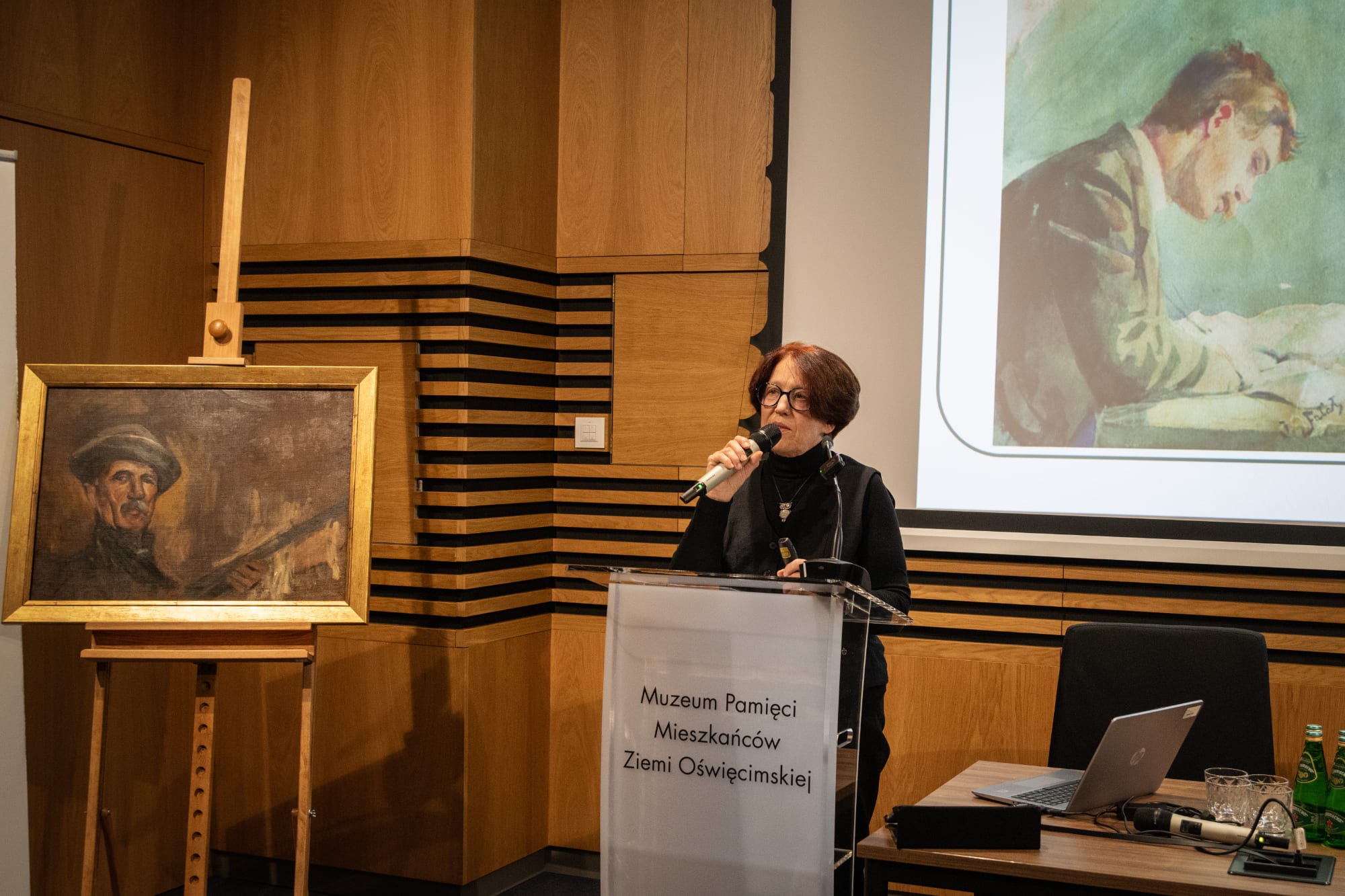
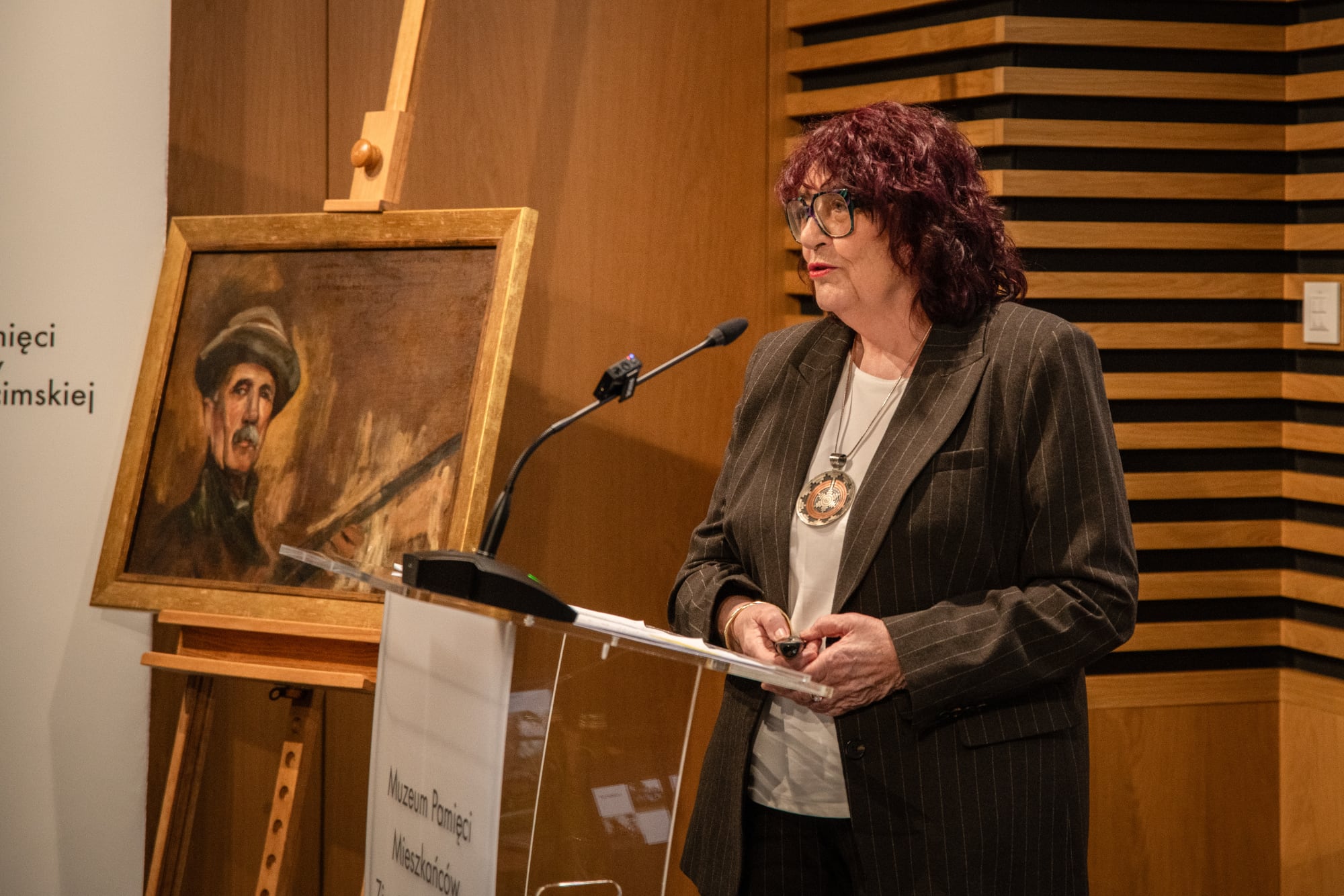
The conference program offered participants a fascinating journey through Julian Fałat’s life and artistic career, combining historical perspectives with personal recollections. The event also featured a self-portrait of Julian Fałat from the Museum’s collection.
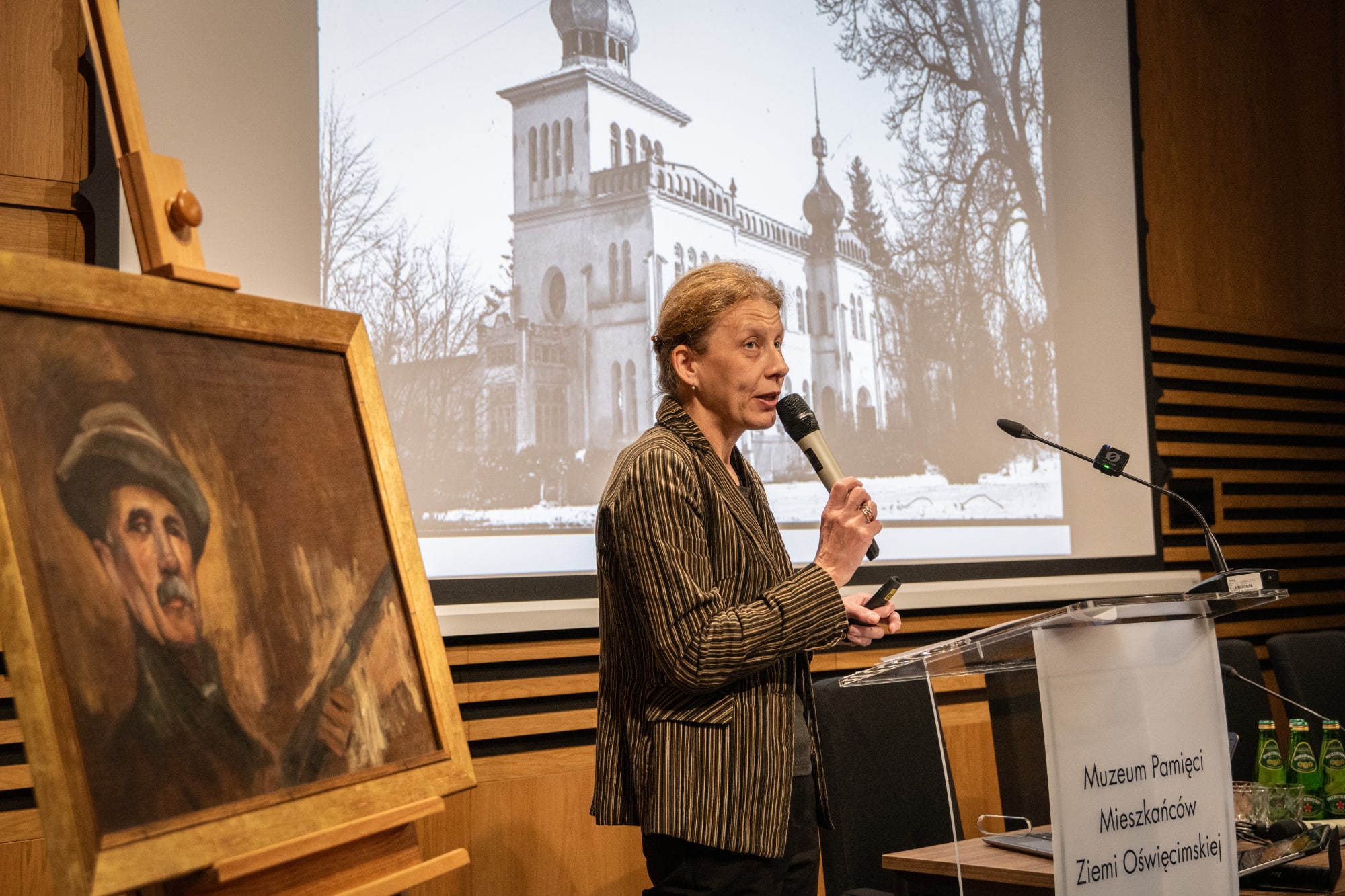
The first speaker was Teresa Dudek-Bujarek, Head of the Department of Art and Decorative Arts at the Historical Museum in Bielsko-Biała. In her presentation, titled “Julian Fałat’s Artistic Exploration of the World – from Tuligłowy to Bystra,” she introduced the artist’s life and career, discussing everything from what first inspired his interest in painting, through his years of education, travels and search for artistic inspiration, to his work as a painter of hunting scenes for King Wilhelm of Prussia and his appointment as director of the School of Fine Arts in Kraków, which he successfully transformed into an Academy. The speaker also explored Fałat’s connections with Bystra and Osiek.
Kinga Kawczak from the Department of Art and Decorative Arts at the Historical Museum in Bielsko-Biała was the next speaker. In her presentation, titled “Julian Fałat Was Lucky That Osiek Was So Close to Oświęcim,” she focused on the close friendship between the painter and the Rudziński family from Osiek. She also presented an extensive collection of correspondence illustrating the exceptionally close relationship between the artist and the family. The speaker demonstrated how important the surrounding landscapes were to Fałat’s artistic output, with numerous paintings featuring the ponds, cottages and roadside shrines of Osiek. She also pointed out that Fałat’s circle of acquaintances in Osiek included a close relationship with Father Jan Hajost. The local church, alongside the picturesque landscapes, was a recurring motif in the artist’s work.
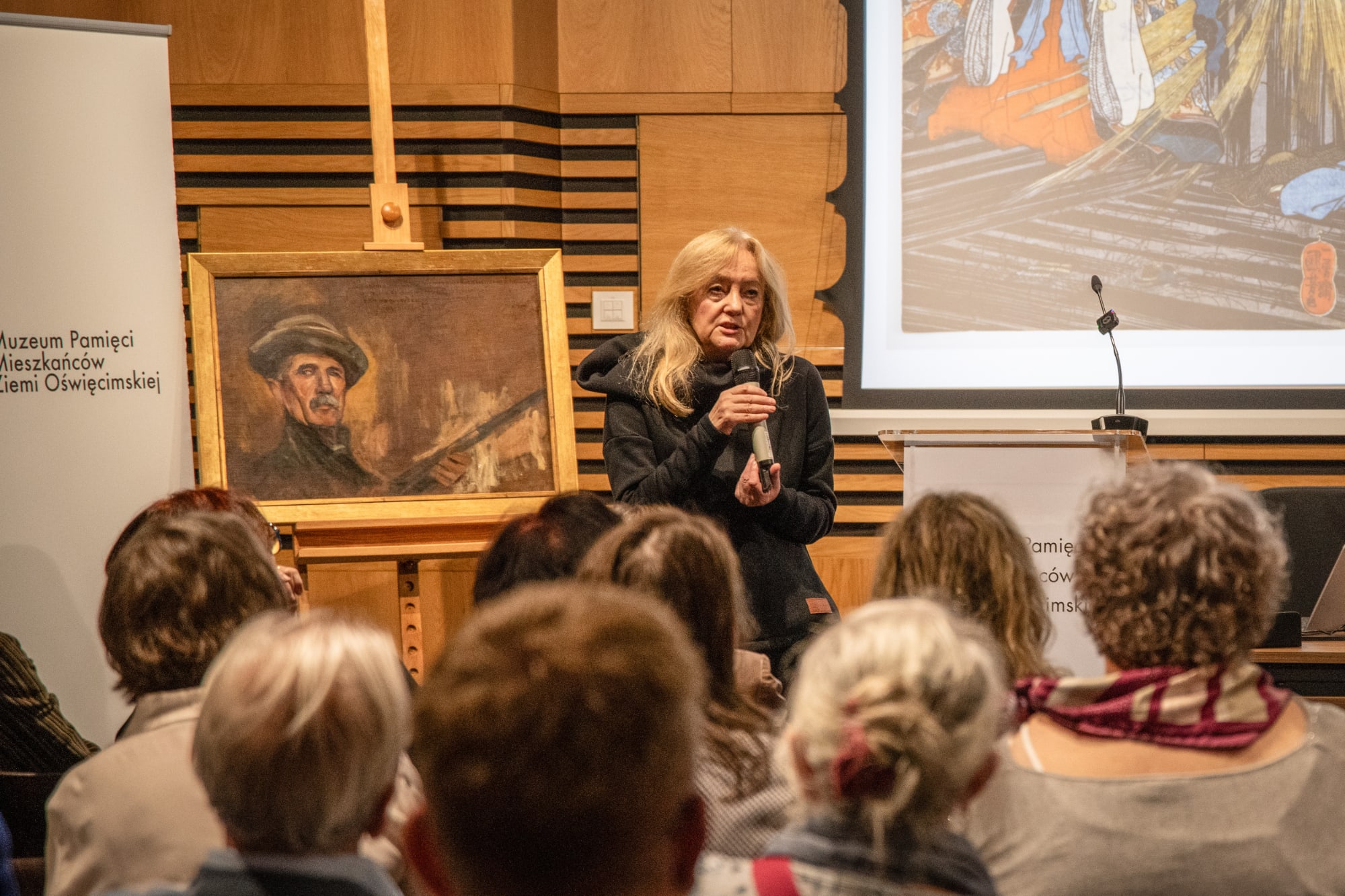
The next part of the conference focused on the influence of Far Eastern art. Professor Anna Król from the Jan Matejko Academy of Fine Arts in Kraków delivered a presentation titled “A Journey to Japan.” She discussed the role of Japanese art at the turn of the 20th century and its influence on European artists, including Julian Fałat. She also introduced the history of the first encounters between Polish society and the art of Japan, highlighting the role played by Feliks Jasieński. In addition, she outlined the characteristic features of Japanese painting and identified specific elements of its influence visible in Fałat’s works.
The conference concluded with a presentation by Professor Maria Zrałek of Humanitas University in Sosnowiec, who is also the artist’s great-granddaughter. In her talk, “Julian Fałat: Family and Friends, Art, Travel and Patriotism – the Four Pillars of His World,” she shared a deeply personal perspective on her ancestor. Her scholarly presentation was enriched with vivid family anecdotes, giving the event a particularly intimate and personal dimension.
The conference at the Remembrance Museum of the Land of Oświęcim allowed participants to see Julian Fałat not only through the lens of his masterful watercolors, but also as a man of extraordinary sensitivity, a patriot deeply attached to the Polish landscapes he loved, and a person full of charm and warmth. The event will remain in the memories of art enthusiasts and local history lovers for a long time, demonstrating that the legacy of this great painter continues to live on and inspire future generations.